
New kitchen enthusiasts might find it surprising, but the truth is that pots and pans are closely related to your overall cooking experience. Having the right ones can genuinely make a difference. According to chefs and my friends who love cooking, choosing well-made, practical pans helps with better heat distribution and more efficient meal preparation, and that really shows in practice.
After trying several types of pans, both deep and shallow, the ones that stand out most are the sautepan and the skillet. While they may look similar at first glance, they differ in several key ways, and understanding those differences can help you choose the right pan for each dish.
What Is a Sauté Pan?
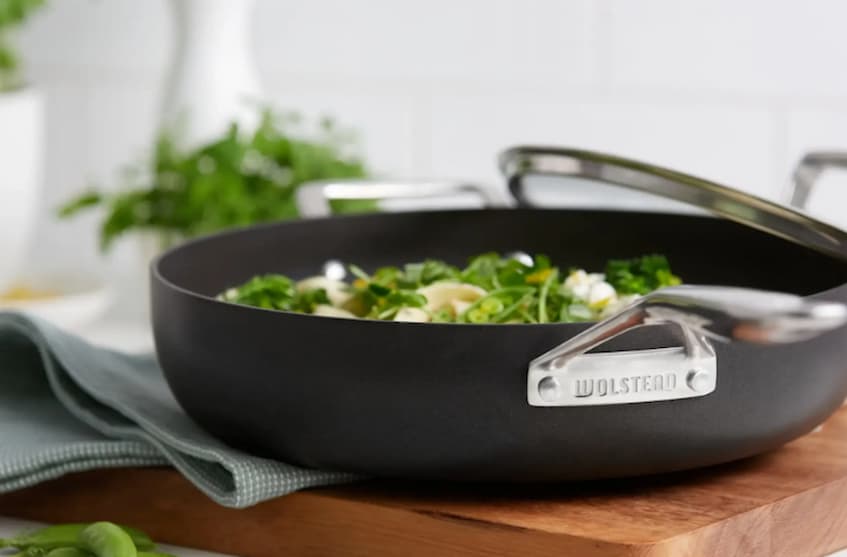
A sautepan is a versatile piece of cookware ideal for cooking a wide range of foods using techniques like frying, simmering, and more. It is characterised by its wide base and straight, shallow sides, perfect for keeping liquids inside. The sides, or walls, of this pan are around 5 cm or higher, making it suitable for a wide variety of meals.
As a bonus, cooking in it helps reduce spillage. These pans are generally sold with lids, and choosing one that includes a lid is important, as it helps trap heat and enhance the flavour of your meals.
What Size Is a Sauté Pan?
The most common sizes of this pan are 24cm and 28cm, suitable for cooking for 1 – 4 people. However, if you have a larger family, choosing a 30cm or 32cm would be better.
Applications of Sauté Pans
These cooking items are perfect for sautéing, searing, stir-frying, braising, shallow boiling and much more. Thanks to their straight sides and wider base, sauté pans allow you to add plenty of ingredients, making them ideal for preparing larger portions and a wide variety of dishes.
Given the versatility of this pan, don’t be afraid to experiment. You can use it for almost everything, from sautéing vegetables until tender and preparing risotto to cooking creamy pasta and achieving a nicely browned texture on meat or bread.
Depending on your needs, you can choose from a non-stick pan for easier food release or a stainless steel or cast iron option, which are ideal for high-heat searing and achieving a better crust on meats and vegetables. Non-stick pans are generally more forgiving and easier to work with, while stainless steel and cast iron require a bit more technique but offer excellent browning and flavour development.
What Is a Skillet?
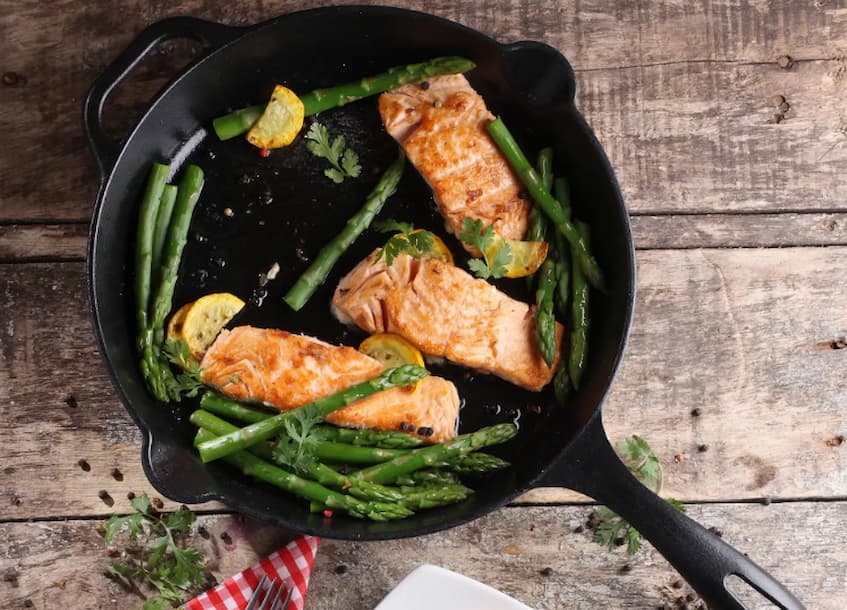
Just like the other cookware pans, this one can also take pride in its wider base, with the main difference being in the sides. When compared to the sides of a sauté pan, the sides of the skillet are rather slanted or tapered. Quite often, a skillet is compared to a frying pan because of its similar design and functionality. In comparison to a sauté pan, a skillet is much flatter and often smaller in diameter. Unlike sauté pans, skillets rarely come with lids, and that’s because they serve a different purpose.
When compared, a sauté pan is great for cooking smaller and larger amounts of ingredients, which is not always the case with a skillet due to its slanted sides. Because of this design, skillets are less suitable for cooking with larger amounts of liquid, as it can easily overflow or splash onto the stove, creating a mess.
What Size Is a Skillet?
The most common sizes of a skillet are 24cm and 28cm. But larger families can certainly choose from the larger skillets between 30cm and 32cm.
Applications of Skillets
Skillets are mainly used as frying pans, and they certainly are one of the most common types of pans used in the kitchen. In addition to frying, they can also be used for roasting, baking, and toasting, making them just as versatile and widely used as sauté pans.
When comparing them, it seems that the first ones are more versatile and easier to use as they’re considered all-in-one types of pans that can be used literally for everything. Personally, I agree with this because I use mine literally for everything, even for steaming and making soups and potage. Since it’s said that it can also be used as a steamer, I bought one with a steamer and a lid.
As you can see, both of these pans are a necessity in the kitchen. If you have the storage space and skills, owning both of them is the best thing you can do. However, if you need to choose one, choosing a saute pan would be a better option, as this is considered an all-in-one pan where you can cook almost anything.