
From the late-1970s M1 and the 1980s M3 touring specialist to the V10-powered M5, BMW has long built its reputation on true driver’s cars. While the German manufacturer masters balanced chassis dynamics and potent engines, its factory exhausts often leave enthusiasts wanting more. Whether it’s a classic icon or a modern twin-turbo M car, upgrading the exhaust remains one of the most rewarding modifications motoring enthusiasts can make.
Limitations of Factory BMW Exhausts
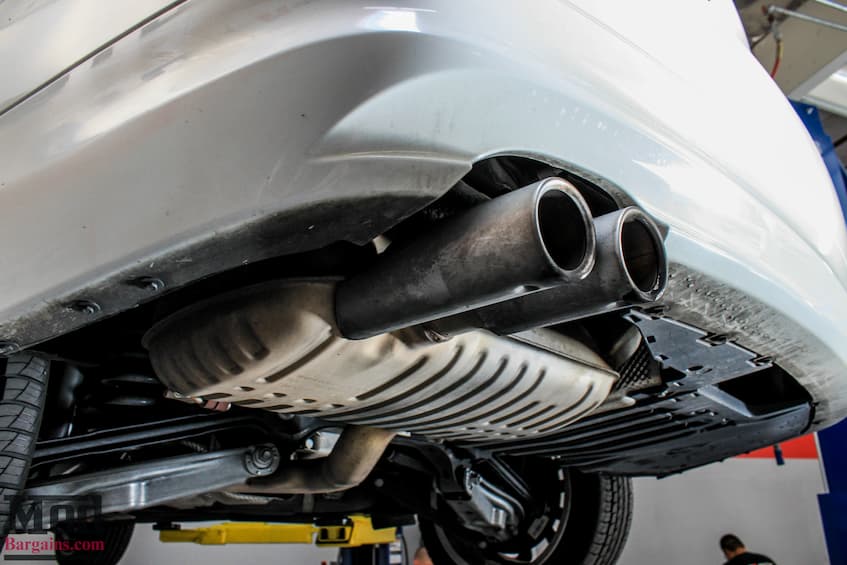
Unlike most brands, BMW invests significant engineering effort into its factory exhausts. The carmaker designs systems that optimise backpressure, exhaust velocity, and scavenging. BMW also incorporates active valving and sound tuning, offering factory M Performance exhausts for select 2, 3, and 4 Series and M models to satisfy demanding owners at a premium price. However, the brand is still affected by common exhaust issues found across the automotive industry, including:
- Emissions and Noise Regulations: Modern BMWs are equipped with catalytic converters, resonators, and Otto Particulate Filters (OPFs) to comply with strict global emissions and noise regulations. While the components are effective at trapping pollutants and keeping cabin noise refined for daily driving, they create significant backpressure and act as acoustic baffles, restricting exhaust gas flow and limiting turbo efficiency and throttle response. The mandatory additions also mute the engine’s signature exhaust tone.
- Cost-Effective Manufacturing: Although defined as a premium carmaker, BMW still deploys cost-cutting measures, especially in base trim cars. To keep production costs down, factory exhausts often use crush-bent piping rather than smooth mandrel bends. Crush bends pinch the pipe at turns, reducing its internal diameter and creating turbulence that slows down exhaust velocity.
- Increased weight: Emissions regulations and cost-saving production methods both add unnecessary weight to factory exhausts. Stricter rules require heavy, restrictive mufflers and resonators. Meanwhile, like most manufacturers, BMW uses thick mild-steel piping to keep production efficient and affordable, adding extra weight to cars built for speed.
The Case for Performance Exhaust Systems
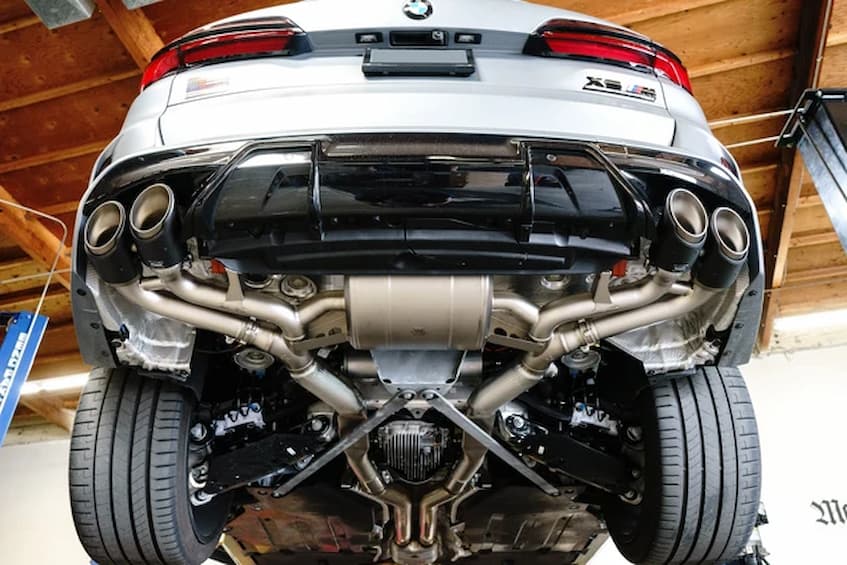
There’s no doubt that upgrading to a BMW performance exhaust solves most factory restrictive points and bottlenecks, letting the engine breathe freely, while also restoring the aggressive, unfiltered sound enthusiasts expect. Key aftermarket components and systems include:
- Downpipes: Replacing the restrictive factory downpipes with high-flow catted or cat-less options offers the single biggest improvement in turbo spooling, power gains, and raw engine sound.
- Midpipes: Swapping to a single or equal-length midpipe removes restrictions from primary and secondary cats while also optimising flow. This eliminates raspy exhaust notes, instead providing a deeper, smoother sound.
- Axle-Back Systems: Upgrading the rear section changes the sound character and visual styling in the tips without triggering check-engine lights or affecting emissions equipment.
- Valving: Piping fitted with aftermarket valve controllers allows drivers to manually override BMW’s own factory exhaust flaps, keeping them open as needed for maximum sound at all engine revs.
Key Benefits
Swapping restrictive factory piping with a BMW performance exhaust provides all cars bearing the BMW badge multiple benefits:
Increased Power and Torque
By combining wide-diameter and straighter tubing with high-flow components, aftermarket systems reduce backpressure, increase exhaust velocity and optimise scavenging. The increase in flow efficiency and speed improves combustion and intake efficiency, resulting in engines that readily produce more power and low-to-mid-end torque.
Improved Exhaust Sound
Engines like the naturally-aspirated V10 S85, the turbocharged B58 and N55 inline sixes, and the naturally aspirated M88 in the M1 are legendary for their distinct engine and exhaust sound. Aftermarket systems remove artificial muffling, unlock deeper lows, and provide aggressive pops and burbles in all BMW cars, regardless of engine or displacement.
Weight Savings
BMW aftermarket exhaust systems made from high-grade 304 stainless steel, titanium or Inconel can shave off anywhere from 10 to 25 kilos off the weight of a factory exhaust. This directly impacts acceleration, braking and overall handling performance.
Enhanced Aesthetics
Customisable exhaust tips in a variety of finishes (polished chrome, brushed aluminium, matte black, or carbon fibre), paired with high-gloss stainless steel or matte titanium mid and end-section piping, provide more character and upscale aesthetics to both regular and factory-performance BMWs.
BMW Models that See the Biggest Power Gains
While naturally aspirated BMWs, like the E46 M3 or E92 M3, see significant sound and throttle benefits, it’s turbocharged BMW models that experience higher horsepower and torque increases.
Since turbos rely on exhaust velocity to spool up, reducing flow restrictions directly behind the turbine (with parts like high-flow downpipes and cats) ensures faster spooling and increases turbo efficiency. Engines that gain the most are:
- BMW M340i / M440i with the 3.0-litre inline 6 B58, with power gains averaging 30 to 50hp at the rear wheels.
- BMW M3 / M4 in F80/F82 guise and the S55 and the newer G80/G82 with the S58 for significant mid-range torque and up to 25hp with cat-less downpipes.
- BMW 335i / 135i with the N54/N55 engine, seeing gains of 30hp with unrestricted downpipes and more with stage tuning.